Guides
Lye in Soap: Why None Is Left in a Cured Bar
By The Soap Brain Team — Cold-process soap makers & formulators
·
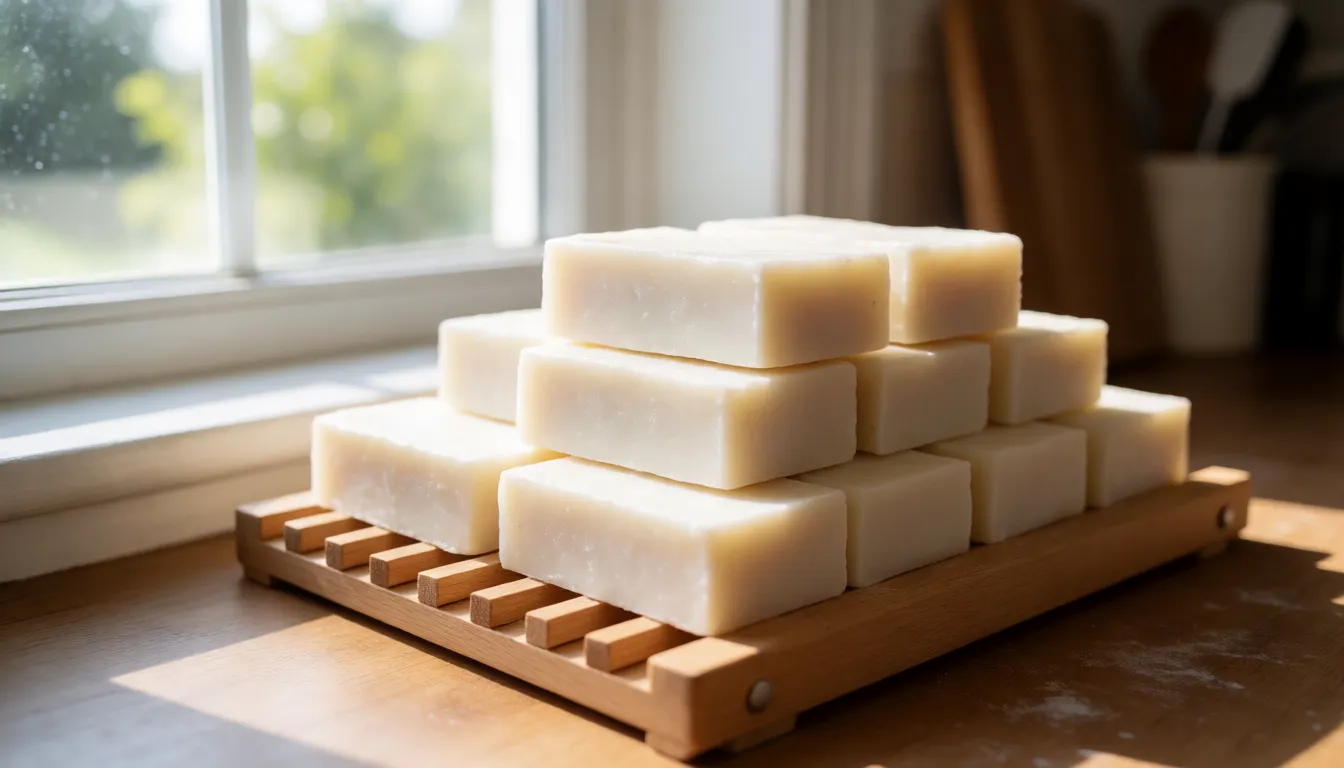
Lye is the ingredient that makes soap soap, and it's also the one people most want to know is gone from the bar.
The short answer
Every true soap is made with lye, because nothing else turns fat into soap. In a correctly made and cured bar, though, the lye has been used up in the reaction. What's left is soap and glycerin, not lye.
The rest of this article shows why both statements hold, how to read a label with that in mind, and which lye to buy if you're going to make a bar yourself.
What lye does: saponification worked through
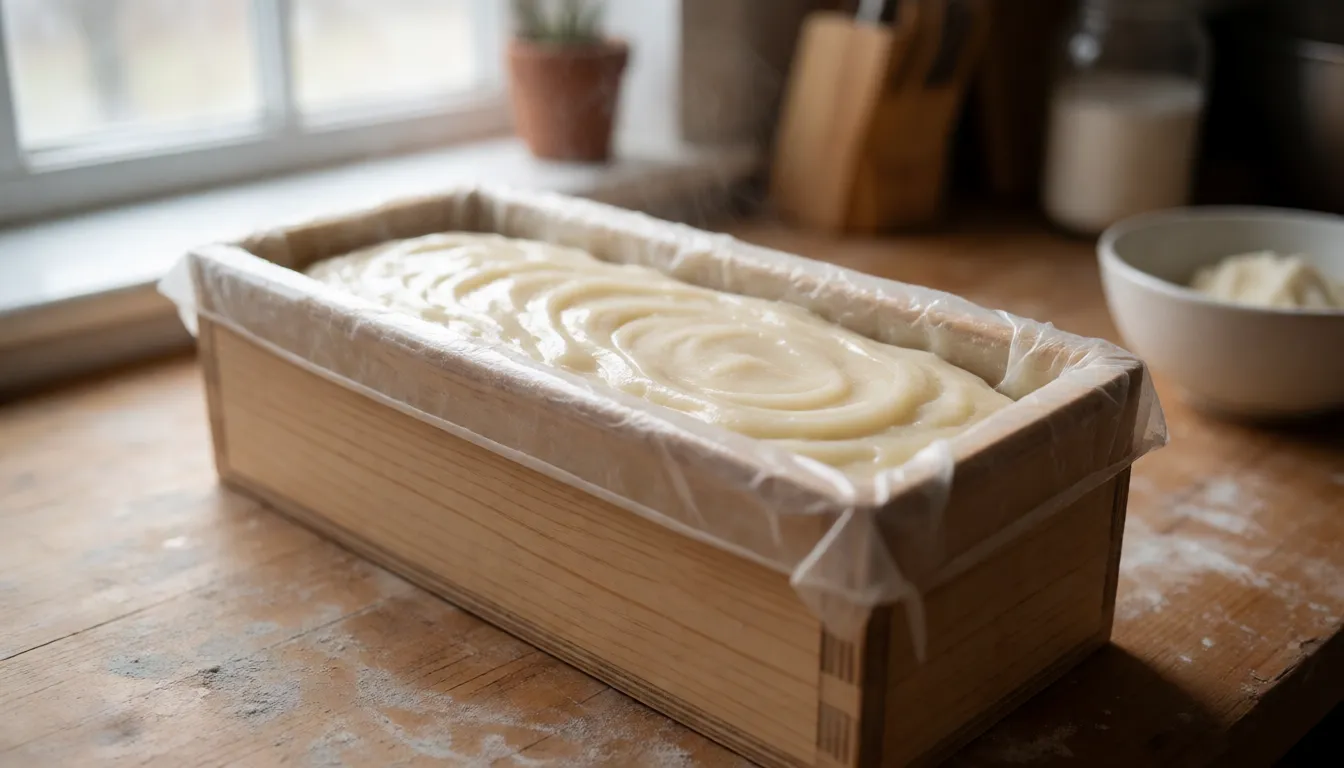
Lye is a strong alkali. For solid bars it's sodium hydroxide (NaOH), also sold as caustic soda. For liquid and soft soap it's potassium hydroxide (KOH).
Saponification is the reaction of a fat or oil with an alkali. Fats and oils are triglycerides: one glycerol backbone holding three fatty acid chains. Saponification breaks those three bonds, frees the fatty acids from the glycerol, and neutralizes each one with the alkali.
In words: one triglyceride plus three NaOH gives three soap molecules plus one glycerol.
As an equation:
triglyceride + 3 NaOH → 3 fatty-acid sodium salts (soap) + glycerol
Take olive oil. It is mostly oleic acid, so its fatty acid chains are mostly oleic. Each freed chain pairs with sodium from the NaOH, and the product is sodium oleate. That is where the label name "sodium olivate" comes from. Coconut oil gives "sodium cocoate" the same way, from its own mix of fatty acids.
Every hydroxide in the reaction gets used. Each triglyceride takes three NaOH, in a fixed ratio. Different oils have different chain lengths, so each oil needs a different amount of alkali per gram. That oil-specific figure is its SAP value (saponification value): the amount of alkali needed to saponify one gram of that oil. A lye calculator holds these values for you. What they mean and how they can go wrong is covered in Lye Heavy Soap: How to Tell, Fix It or Toss It.
The glycerol is not a waste product. It stays in a handmade bar, dispersed through the soap. That's a plain description of what's in the bar, not a claim about how it treats any particular skin.
This is also why lye can't be swapped for something gentler. Freeing fatty acids from glycerol and neutralizing them takes a strong base. A weak alkali won't do the job, and no other ingredient does it at all.
Why no lye is left in a cured bar
Lye reacts with each oil in a fixed ratio, so a correctly calculated recipe uses all of it. Most recipes go one step further with a superfat, commonly around 5%: slightly more oil than the lye can react with. Any small error then lands on the side of a little leftover oil, which is harmless, rather than leftover lye.
The reaction itself is quick. In cold process soap it is essentially finished within a day or two of pouring. The 4 to 6 weeks of cure that follow are mostly water evaporating and the bar settling into a harder bar. How to Make Soap: A Beginner's Cold Process Soap Recipe takes a first batch from start to cure.
The exception is a bar made with too much lye, from a measuring slip or a wrong calculator setting. Curing does not fix that. Lye Heavy Soap: How to Tell, Fix It or Toss It covers the signs, the causes and what to do with one.
Why a lye-free bar still reads alkaline
A soap molecule is a salt of a weak acid (a fatty acid) and a strong base (sodium or potassium hydroxide). When a salt like that dissolves in water, the fatty-acid end pulls a little hydrogen from the water, and the water is left with slightly more hydroxide than it started with. The solution turns mildly alkaline on its own, with no leftover lye involved.
A finished, cured bar reads at about pH 9 to 10. So "alkaline" does not mean "contains lye." Soap is alkaline by its own chemistry, and that reading is normal.
How to check a finished bar yourself is covered in How to Zap Test Soap Safely, and What a Zap Means, so it isn't repeated here.
Reading labels, "lye-free," and detergent bars
How labels name soap
Ingredient lists name substances as they exist in the finished product. Nobody lists "olive oil, sodium hydroxide," because by the end neither one exists in that form. You see the reaction product instead:
| On the label | Made from | What it means |
|---|---|---|
| Sodium olivate | Olive oil + NaOH | Saponified olive oil, mostly sodium oleate |
| Sodium cocoate | Coconut oil + NaOH | Saponified coconut oil |
| Saponified olive oil | Olive oil + NaOH | Same thing as sodium olivate, named by the process |
| Potassium cocoate | Coconut oil + KOH | Soap from potassium hydroxide, typical of liquid soap |
Any of these names means oil plus lye, already reacted. The lye is not hidden. It has become part of the soap.
Detergent bars
Many products sold as soap or "beauty bars" are made from synthetic surfactants instead of saponified fat. These are detergent bars (syndets), not soap. They contain no lye because no saponification took place.
To spot one, look for surfactant names where the "sodium [oil]-ate" names would be, such as sodium lauryl sulfate or sodium cocoyl isethionate. True soap is a fatty-acid salt, and a detergent bar is a different chemistry. Neither is automatically better for skin, and this article makes no claim either way. For how the FDA draws the legal line between soap and other cleansing products, see Is It a Cosmetic, a Drug, or Both? (Or Is It Soap?).
"Lye-free" claims
A "lye-free" soap is one of two things: a detergent bar, or a soap made with lye where the lye isn't listed. Melt-and-pour falls in the second group, since its base was saponified by someone else. Types of Soap Making: Which Methods Use Lye covers that in full.
Which lye to buy, and where
Sodium hydroxide or potassium hydroxide
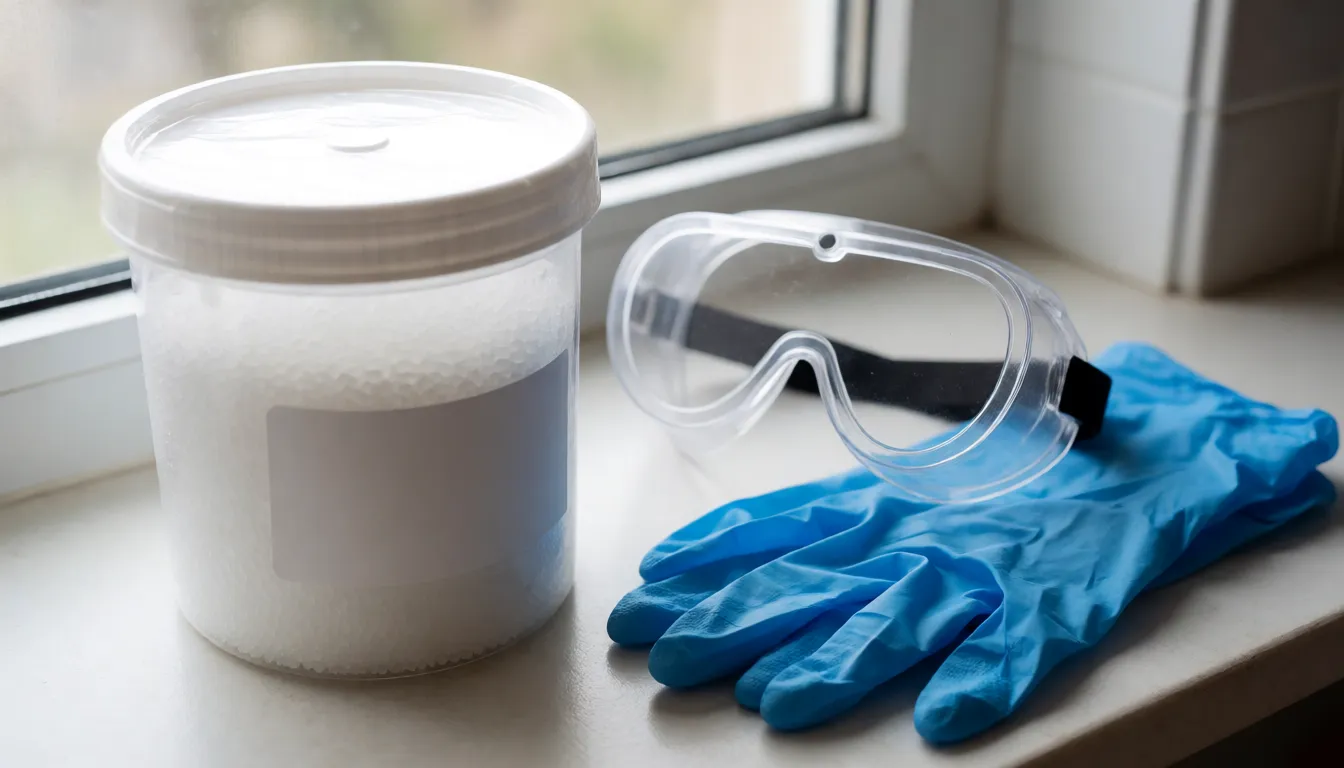
Buy sodium hydroxide (NaOH) for bar soap and potassium hydroxide (KOH) for liquid or soft soap. They are not interchangeable. Their SAP values differ, so a recipe built for one gives the wrong result with the other. If you're weighing the two, KOH Safety for Liquid Soap: Handling, Paste and Dilution covers the potassium side.
Homemade wood-ash lye is neither. Soaking ash in water gives mostly potassium carbonate, which makes a soft soap, and its strength can't be measured closely enough to calculate a recipe from. Buy commercial lye.
Purity
Sodium hydroxide sold for soap making is typically 97 to 99% pure or better. Calculators, ours included, assume 100% for NaOH unless told otherwise. The small gap means slightly less lye goes in than the math assumes, and your superfat absorbs it. KOH flakes are commonly around 90% pure, meaning roughly a tenth of what's in the bag isn't potassium hydroxide, mostly water.
Set the calculator to match
In your lye calculator, do two things:
- Select the lye type you bought: NaOH or KOH.
- Check the purity under advanced options. It starts at 100% for NaOH and 90% for KOH. If your supplier states a different figure, enter theirs. The calculator adjusts for it, so you don't need to correct anything by hand.
The calculator gives the lye amount for your own oils. No number in this article can stand in for it, because the right amount depends on which oils you use and how much of each. If you're unsure what the outputs mean, Soap Calculator Numbers Explained: What to Trust walks through them.
Where to buy it
Soap-making supply shops sell lye packaged for soap making, most of them online, and so do the big online marketplaces. Some hardware and farm-supply stores stock pure sodium hydroxide too, usually on the drain-opener shelf. That can work, but only if the label lists sodium hydroxide and nothing else. Liquid and gel drain cleaners, and blended drain-cleaner crystals, won't do: their additives and unknown strength have no place in a recipe where the lye has to react in a known ratio.
Form and storage
Beads, microbeads and flakes all work the same once weighed. Lye absorbs moisture and carbon dioxide from the air, which slowly weakens it, so buy a size you'll use in a reasonable time. Keep it sealed in its original container or a labeled HDPE (#2) or polypropylene (#5) plastic one. Never use glass, which lye etches, or anything aluminum. Store it out of reach of children and pets and away from food, where it can't be mistaken for sugar or salt.
Safety in one paragraph
Lye is corrosive. Weigh it on a scale, and always add lye to water, never water to lye. When you mix it, wear splash goggles, gloves and long sleeves, and work with ventilation, because lye water gives off fumes when it's mixed. If it touches your skin, rinse with running water for at least 15 minutes. The full checklist is in Lye Safety for Soapmakers: Gear, Airflow, and First Aid.
Where to go next
With your oils chosen, put them into the Soap Brain lye calculator and it gives the lye amount for that exact recipe. Read the lye safety guide before you open the lye.
More from the blog
- What Is Saponification? How Oil and Lye Become Soap
- How to Make Liquid Soap: KOH Paste, Dilution, Fixes
- How to Make Breastmilk Soap: Melt and Pour or Cold Process
- Essential Oils for Soap Making: Rates, Picks and Fixes
- Soap pH: What's Normal, Why It's Alkaline, How to Test
- Master Batching Soap: 1:1 Lye Solution and Oil Blends
- All posts →