Safety
Lye Safety for Soapmakers: Gear, Airflow, and First Aid
By The Soap Brain Team — Cold-process soap makers & formulators
·
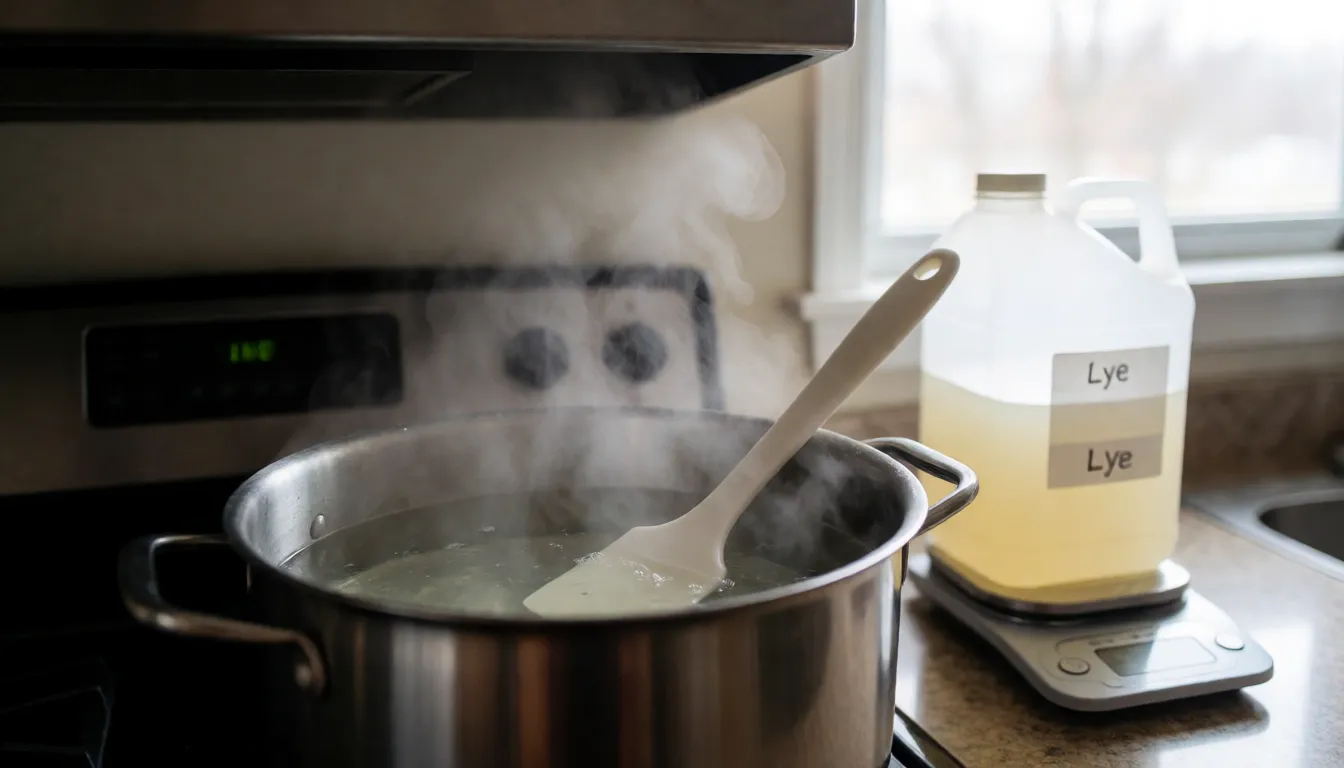
Add the lye to the water, never the water to the lye. Dissolving lye (sodium hydroxide) in water releases a lot of heat, and that order of mixing keeps the heat spread out where you can control it. The rest of this article covers what to wear, where to stand, what to mix in, and what to do if something goes wrong. It reads best as a checklist you run through before the lye container is open.
If you already have a number from the Soap Brain lye calculator, everything below is about handling that number safely.
The golden rule: add lye to water, and the heat behind it
Dissolving lye in water is exothermic, meaning the reaction gives off heat. Where that heat goes depends on how you combine the two.
Sprinkle lye gradually into a larger volume of water and the heat spreads through the liquid as it's produced. Pour water onto a pile of lye and the reaction concentrates in one spot. That spot can flash to steam, spit, or erupt out of the container, and clumped lye can set into a hard mass at the bottom that dissolves slowly and unevenly. It's a heat-distribution problem, not an arbitrary rule.
How hot the solution gets depends on concentration. The water-to-lye ratio in your calculator is the amount of water relative to the lye. A lower water amount means the same lye is dissolving in less liquid, so the solution ends up hotter and more concentrated. Lye water commonly reaches around 190–200°F, close to boiling, even when you start with room-temperature water. The container has to tolerate that heat, and a recipe with less water asks even more of your setup.
Practical habits that follow from this:
- Measure the water first, then add the lye in small amounts.
- Stir gently with a heat-safe tool. Vigorous stirring throws droplets.
- Use a container much larger than the volume of liquid, so foaming or a surge has room to rise without going over the rim.
That heat and splash risk is why the next section exists.
PPE, item by item
PPE is personal protective equipment. Each piece covers a specific way lye water reaches you.
- Splash-proof goggles. Regular glasses and most safety glasses leave gaps at the sides, top, and bottom, and a splash finds them. Lye in the eye is the injury you least want to explain. Wear goggles for the dry lye, the lye water, and the fresh soap batter. Batter stays caustic until saponification, the reaction that turns oils and lye into soap, is complete, so a splash of batter during stick blending is a lye splash.
- Chemical-resistant gloves. Nitrile or rubber. Thin vinyl gloves are commonly advised against for lye work. Replace any glove that tears, and swap out one that gets splashed rather than wearing it through the rest of the batch.
- Long sleeves and pants. They cover the skin a splash or drip would otherwise reach. Choose sleeves that cover your wrists and overlap your gloves.
- An apron. Worn over your clothes, it keeps caustic liquid from soaking through fabric and sitting against your skin. If you get splashed, you can pull it off quickly.
- Closed-toe shoes. A dropped container or a spill on the floor lands on your feet. Sandals leave skin exposed.
Goggles, gloves, and covered skin handle splashes. They don't handle what you breathe, which raises the respirator question.
Do you need a respirator?
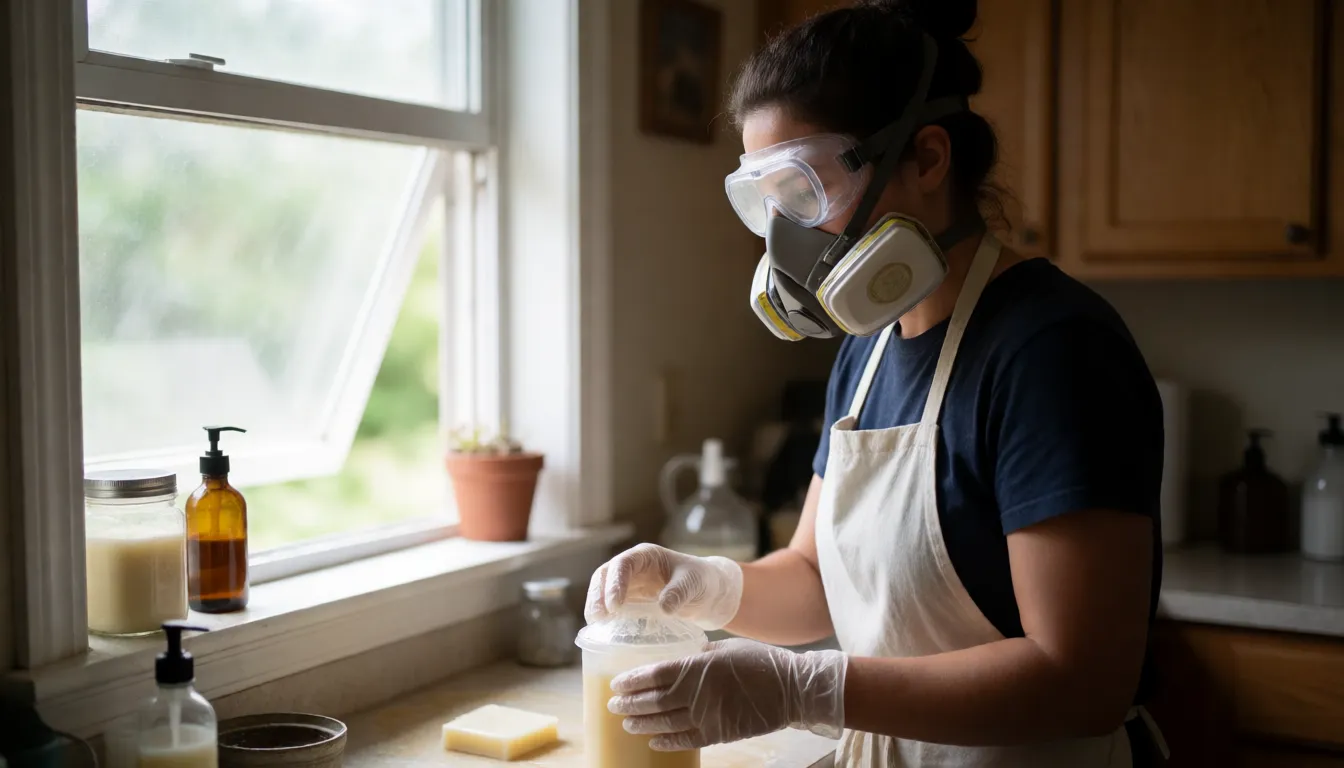
Opinions differ. Many soapmakers get by with good ventilation and no respirator for small batches. Others, and several safety guides, recommend one for mixing lye solution, especially for larger batches or when handling powdery lye, where fine dust can get airborne. It's a reasonable precaution, and if you scale up or have a sensitive airway, it's an easy one to add.
If you do wear one, the type matters. A paper dust mask is not a respirator. It's designed to catch nuisance dust, not caustic vapor, and it's no substitute. If you buy a respirator, check that it's rated for the hazard you're facing, using the manufacturer's or an occupational-safety body's guidance for caustic or alkaline vapors and dust. It should also fit your face, since a poor seal defeats the purpose.
A respirator supplements ventilation and doesn't replace it, so the next thing to sort out is airflow.
Ventilation and fumes
The fumes start the moment lye first dissolves. The sudden heat produces steam and vapor that carries caustic particles, and this is what irritates your nose, throat, and lungs. It peaks as the lye first hits the water, when the temperature is climbing fastest, so that's the moment to be furthest from the container.
Three setups work:
- Outdoors. The simplest option. Choose a sheltered, stable surface out of wind that would blow the solution or your materials around, and out of reach of children and pets.
- Window with a fan. Open a window and set a fan to pull air out through it, with the container between you and the fan so the vapor moves away from your face. Open a second window or door so air can flow in.
- Range hood. If it vents outside, it can carry the vapor away. Mix at the stove, on a stable surface, with the fan running. A hood that only recirculates air through a filter is not a good choice.
In any setup, don't lean over the container to check on it, and stir at arm's length. Once the solution has stopped steaming heavily, most of the release is behind you, but keep the air moving while it cools.
Containers and tools
Lye and its hot solution attack some materials, and heat stresses others. The reasoning for each:
- HDPE or polypropylene plastic (recycling codes 2 and 5) resists lye chemically and tolerates the heat of lye water, which is why it's the common choice. Check for the code on the bottom, and retire any container that's cracked or warped.
- Heat-safe glass doesn't react with lye, but it has to handle the temperature spike. Use glass made to take thermal shock, such as borosilicate, and discard anything chipped or cracked. Thin decorative glass can break when hot lye water hits it.
- Stainless steel doesn't react with lye and handles the heat. It's a good choice for pots and stirring tools.
Avoid aluminum, tin, and zinc. Aluminum reacts with lye and releases hydrogen gas, which is flammable, and the reaction eats away at the container. Tin and zinc are also attacked by lye. That includes aluminum pots, spatulas, and foil. Keep your soap tools separate from kitchen ones and label them, so nobody grabs a lye pitcher for something else.
Even with all this in place, accidents happen, so know the response before you need it.
First aid for skin, eyes, inhalation, and swallowing
Read this now, not while something is on your skin. For deeper detail, the Handcrafted Soap & Cosmetic Guild's lye safety page is a good reference.
- Skin. Remove contaminated clothing and flush the area with running water for 15–20 minutes. Lye keeps working on skin until it's washed off, so don't cut the rinse short. Seek medical care if irritation continues.
- Eyes. Flush with plenty of water for at least 15 minutes and get medical attention immediately. Hold the eye open while rinsing, and keep flushing on the way to care if someone else is driving.
- Inhalation. Move to fresh air. Seek medical care if symptoms such as coughing or breathing trouble persist.
- Swallowing. Do not induce vomiting. Call emergency services or poison control right away. In the US, Poison Control is 1-800-222-1222. Follow their directions on what to give, if anything.
Keep the number where you can see it, and keep a source of running water within reach of your mixing spot.
The vinegar myth
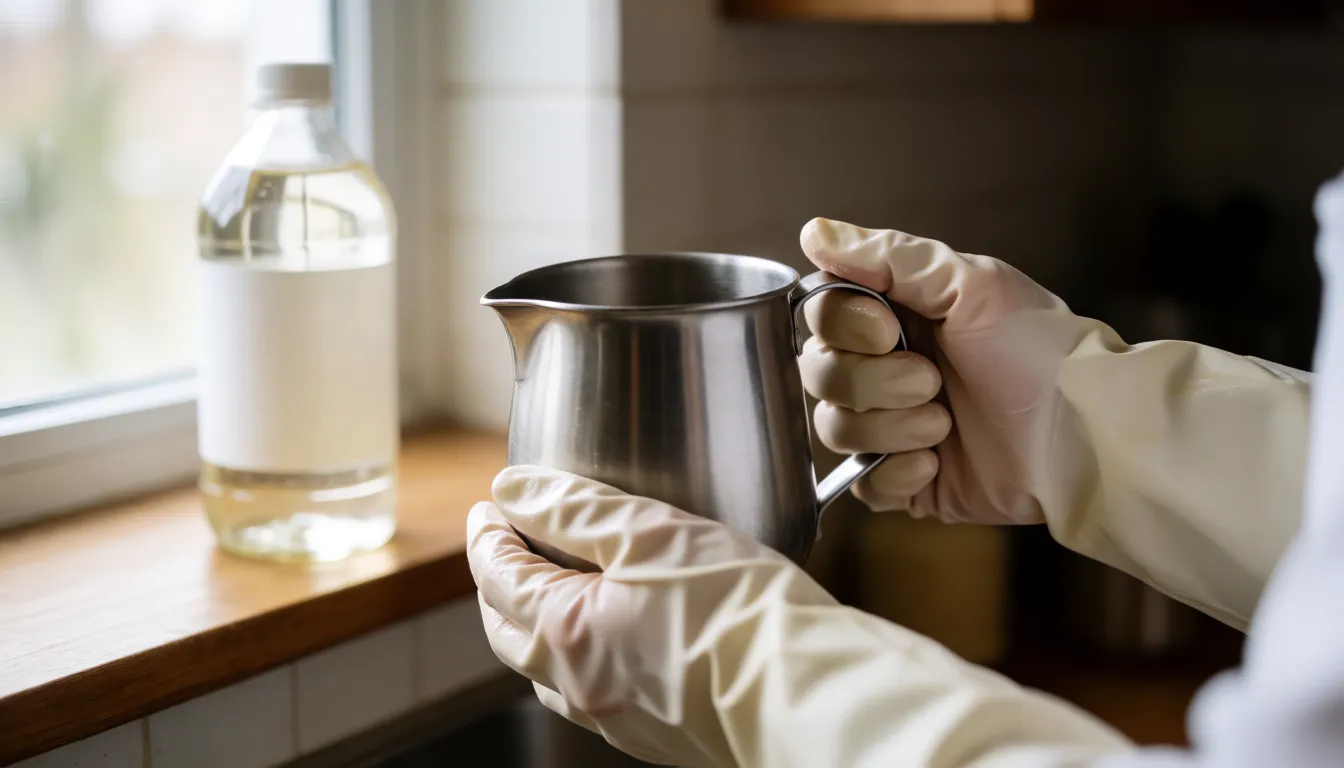
A common piece of advice is to neutralize a lye burn with vinegar. Don't. Lye is a strong base and vinegar is an acid, and neutralizing one with the other is itself a heat-releasing reaction. Doing it on skin or in an eye can add a thermal burn to a chemical one.
For skin and eyes, water is the correct response. It dilutes and rinses the lye away without a second reaction, and it's what the steps above call for. In an emergency the answer is the same: rinse, keep rinsing, and get medical care.
Vinegar has no role in the emergency, and the same restraint applies to cleanup.
Spill cleanup
Keep it simple:
- Put on full PPE before you touch anything, including gloves and goggles.
- Wipe up the spill with disposable towels, working from the edges toward the center so it doesn't spread.
- Rinse the area thoroughly with water, and wipe again.
- Dispose of the towels and don't reuse them.
Don't use aluminum pans, foil, or tools to scoop or wipe. The reaction with lye is exactly what you're trying to avoid. Better yet, avoid needing this routine at all.
Storage and workspace rules
Most lye accidents come from a spill or a mistake made outside the mixing session, so storage counts.
- Sealed. Keep the lye in its original container, or one made of a compatible plastic, with a tight lid. Lye absorbs moisture from the air.
- Labeled. Mark it clearly so nobody mistakes it for a food or cleaning product.
- Dry. Store it where moisture and condensation can't reach it.
- Away from food, acids, children, and pets. Use a high shelf or a locked cabinet, well away from anything edible or acidic.
While you're mixing, keep children and pets out of the room, and never leave a lye solution unattended. It stays hot and caustic long after the steam stops, and a cup of clear liquid can look harmless.
With storage handled, you're ready to work through a recipe. The beginner trinity bar is a simple place to start, and for a longer walkthrough of the same ground, Learn Soap Making's lye safety guide is worth a read.
More from the blog
- Lye Burn First Aid: What to Do for Skin, Eyes and More
- Soap Making: Weigh, Not Volume, for Safe Lye Math
- KOH Safety for Liquid Soap: Handling, Paste and Dilution
- How to Zap Test Soap Safely, and What a Zap Means
- Lye Heavy Soap: How to Tell, Fix It or Toss It
- What Is Saponification? How Oil and Lye Become Soap
- All posts →