Guides
Laundry Soap Recipe: Coconut Bar, Powder or Liquid
By The Soap Brain Team — Cold-process soap makers & formulators
·
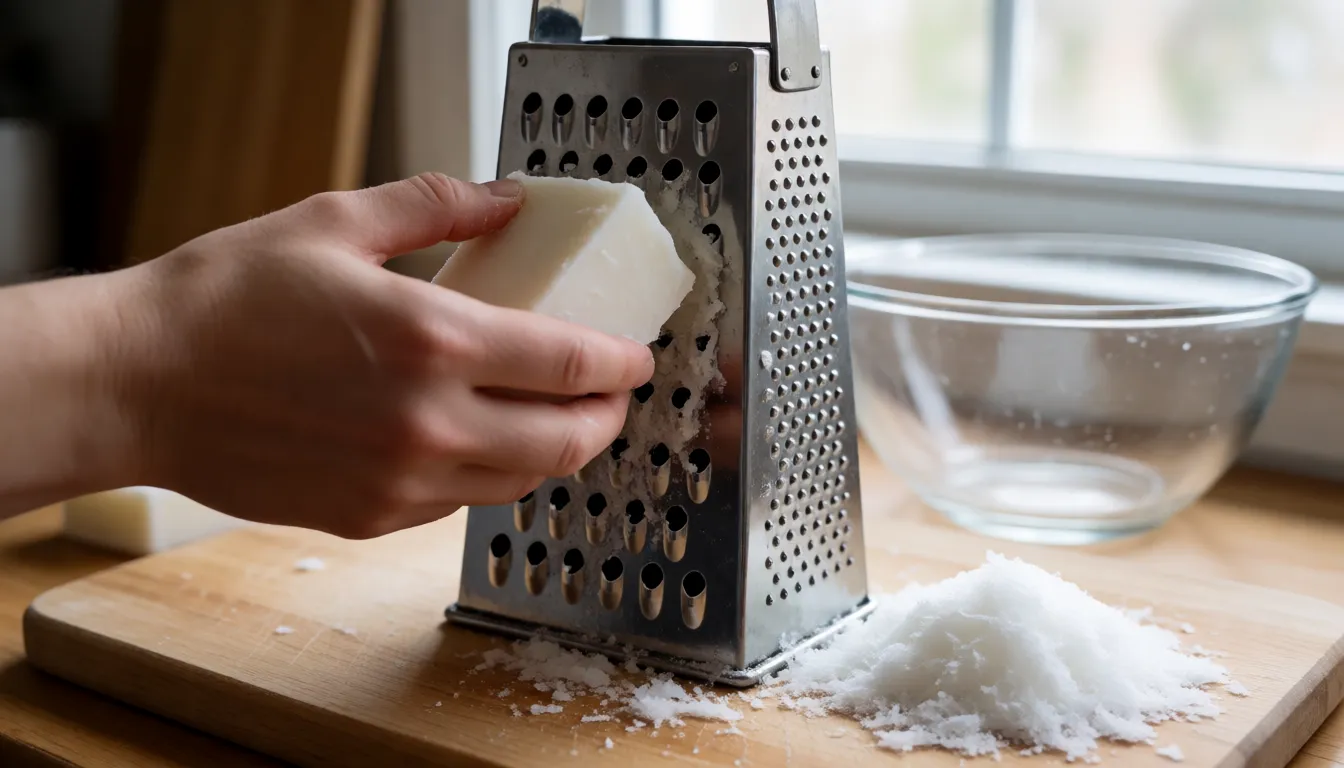
What You're Making: A Coconut Bar, Then Powder or Liquid
Here's the whole path. You make a 100% coconut oil bar at 0% superfat, cure it, and grate it. Then you either mix the shreds with washing soda and borax for a powder, or melt them into hot water for a liquid. The bar is the part that takes a few weeks. Once you have one, the rest takes about twenty minutes.
One honest line before you start: this works best in soft to moderate water on everyday laundry. If your water is hard, read the hard water section before committing a whole batch of towels to it.
Most laundry soap recipes begin with a store-bought bar and treat it as a given. If you make soap, or you're willing to, making the bar yourself means you know exactly what's in it. If lye makes you nervous, the Lye Safety for Soapmakers guide is worth a read first.
Why a 0% Superfat Coconut Bar
Coconut oil makes a big, bubbly lather and keeps doing it in hard water, where a lot of other oils give up. That's why it's the go-to oil for cleaning bars.
Superfat is the bit of oil deliberately left unsaponified so a body bar feels gentle. In laundry soap, that leftover oil is the last thing you want, because it ends up as residue on clothes and in the machine. So the bar is set to 0% superfat: all the oil gets used up.
The catch is that there's no cushion. A sloppy measurement that would be harmless in a body bar can leave a 0% bar lye heavy. Weigh everything on a scale, and check your numbers in the calculator every single batch. To learn more about that risk, see Lye Heavy Soap: How to Tell, Fix It or Toss It.
And once, plainly: this is not a body soap. It's very drying on skin, so don't let it wander over to the sink.
The Coconut Oil Laundry Bar Recipe
This makes roughly eight bars of about 150 g. Scale it up or down from the percentages.
| Oil | Grams | Percentage |
|---|---|---|
| Coconut oil (76°) | 900 g | 100% |
Calculator settings. Put the oil weight into the Soap Brain lye calculator. Set superfat to 0% and lye concentration to about 33%. At 0% the calculator asks you to tick a box confirming you understand there's no safety margin. For a laundry bar that's expected, so tick it. If you'd rather keep a sliver of margin, pick "Laundry soap" as the soap type instead: it sets 1%, which still leaves next to no oil behind. The calculator turns your settings into the lye and water weights for your batch, so write them down and weigh them exactly. For the reasoning behind weighing everything, see Soap Making: Weigh, Not Volume, for Safe Lye Math.
Lye safety. Wear goggles, gloves and long sleeves, and work with the windows open or a fan running. Always add lye to water, never water to lye. If any splashes on your skin, rinse with plenty of running water. For the full rundown, see Lye Burn First Aid.
Fragrance is optional. If you want scent in the bar, use your supplier's recommended rate for that specific oil. To turn a percentage into grams, multiply your oil weight by that percentage. For example, a 2% rate on 900 g of oil would be 900 × 0.02 = 18 g. (That's only the arithmetic, so use your supplier's number, not mine.) Honestly, I skip scent in the bar and put a few drops on wool dryer balls instead, which keeps fragrance out of the wash altogether.
Steps
- Line your mold and have it sitting right next to you. Coconut oil doesn't wait.
- Weigh the water and lye from your calculator's numbers. Add the lye to the water, stir until clear, and set it somewhere safe to cool.
- Melt the coconut oil and let it cool. Aim for both the oil and the lye solution to land around 95–105°F. Cooler helps slow things down.
- Pour the lye solution into the oil and stick blend in short bursts, stirring in between.
- Expect trace in 30–60 seconds. Pour into the mold as soon as it thickens, and tap out the air.
- Leave it uncovered. Unmold at about 12–18 hours, when it's firm enough to hold its shape. Cut right away, because coconut soap gets brittle and crumbly if you wait.
- Cure the bars for 4–6 weeks on a rack with airflow. It's usable sooner, but the full cure gives a milder, longer-lasting bar, and you don't want to grate something soft and sticky anyway.
My first coconut batch went from liquid to fudge while I was still hunting for the spatula. I had the mold across the kitchen, and by the time I got back, the blender was practically standing up on its own. I ended up spooning the soap in, banging the mold on the counter, and smoothing the top with the back of a spoon. It looked rough but made perfectly good laundry soap. Now the mold is ready before I mix anything. For more tricks for taming fast trace, see Salt Bar Soap Recipe Cold Process: Fix Fast Trace. Before you use any bar, a zap test is a sensible check on a 0% recipe.
Washing Soda, Baking Soda, and Borax: What's What
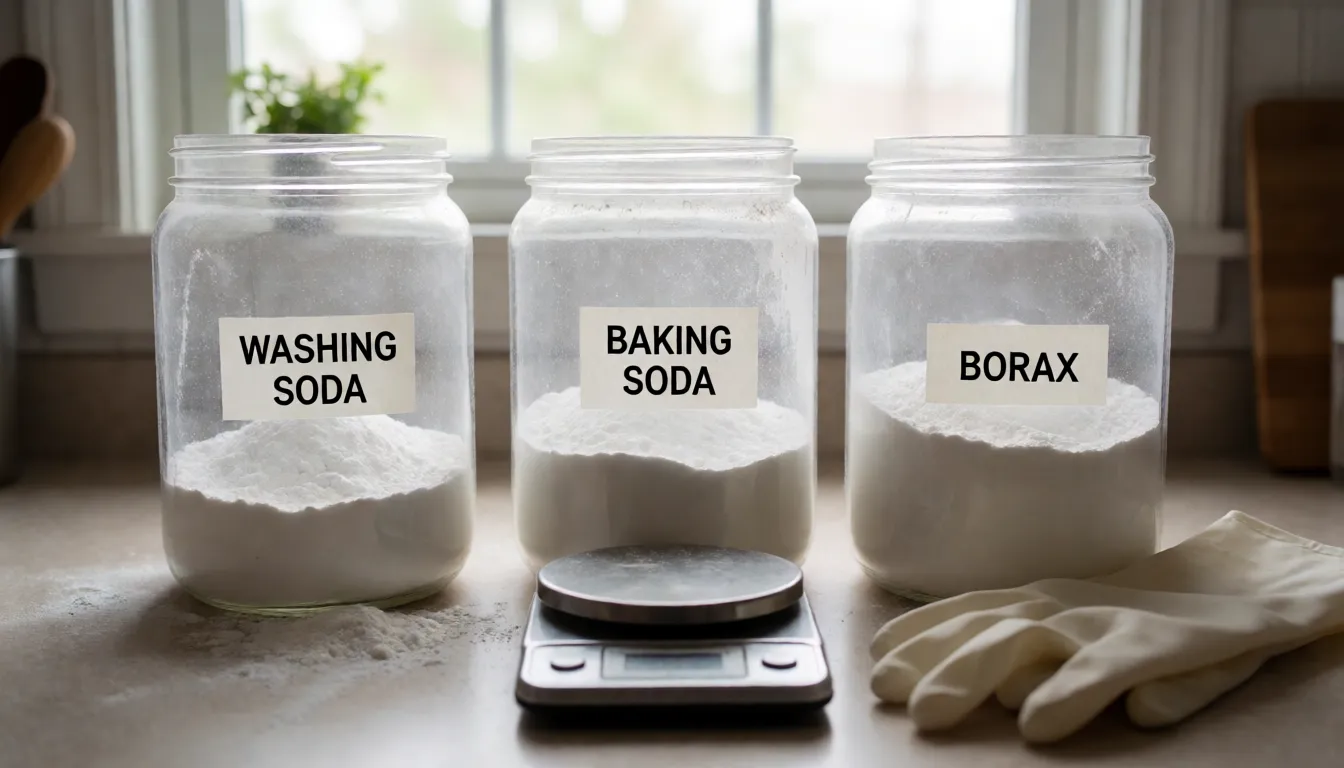
These three look alike and are not interchangeable.
- Washing soda is sodium carbonate. It softens water and boosts the soap's cleaning power. It is not baking soda.
- Baking soda is much milder. Some recipes add it, and it's optional.
- Borax raises the pH of the wash water, which helps the soap clean.
Washing soda and borax both dry out and irritate skin, so wear gloves when you mix, and keep both away from kids and pets.
Borax-free is a real option, not a footnote: the bar plus washing soda works fine. Opinions on borax vary a lot, and I'm not going to pick a side for you. If you'd rather leave it out, swap its weight for more washing soda, or simply omit it from the recipes below and see how your laundry looks. For a range of views, see The homemade laundry detergent debate.
Laundry Powder
I weigh mine so the batch repeats every time. Recipes vary, but this is the ratio I stick to:
- 1 cured bar, grated (about 150 g)
- 200 g washing soda
- 200 g borax (or use 400 g washing soda total for the borax-free version)
Some larger recipes also add baking soda. That's optional, and I usually skip it.
Steps
- Grate the bar as finely as you can. A food processor makes this quick, and fine shreds dissolve much better in the wash.
- Wearing gloves, mix everything in a big bowl until the color is even.
- Pack it into an airtight container and keep it somewhere cool and dry. Damp air makes it clump.
Per load: Start with 1–2 tablespoons and adjust over the first few loads. Toss it straight into the drum with the clothes, not into the dispenser, where it can clog.
If mixing powders isn't your thing, the liquid is next.
Laundry Liquid
This one is more of a gel than a store-bought pour, and it will look a bit odd. That's normal.
- 100 g grated soap
- 1,000 g hot water for melting
- 100 g washing soda
- 100 g borax (or 200 g washing soda total, no borax)
- 3,000 g more hot water
Steps
- Melt the grated soap in the 1,000 g of hot water on the stove over low heat, stirring until it's dissolved.
- Off the heat, and wearing gloves, stir in the washing soda and borax until they dissolve.
- Add the remaining 3,000 g of hot water and stir well.
- Cover it and leave it overnight to thicken.
- In the morning, give it a good stir or shake. Expect a gel, sometimes lumpy, and sometimes a little separated.
Per load: Start with about 1/4 cup for HE machines and 1/2 cup for standard washers. Treat these as starting points and adjust after the first few loads based on how the clothes come out.
HE and Front-Load Machines
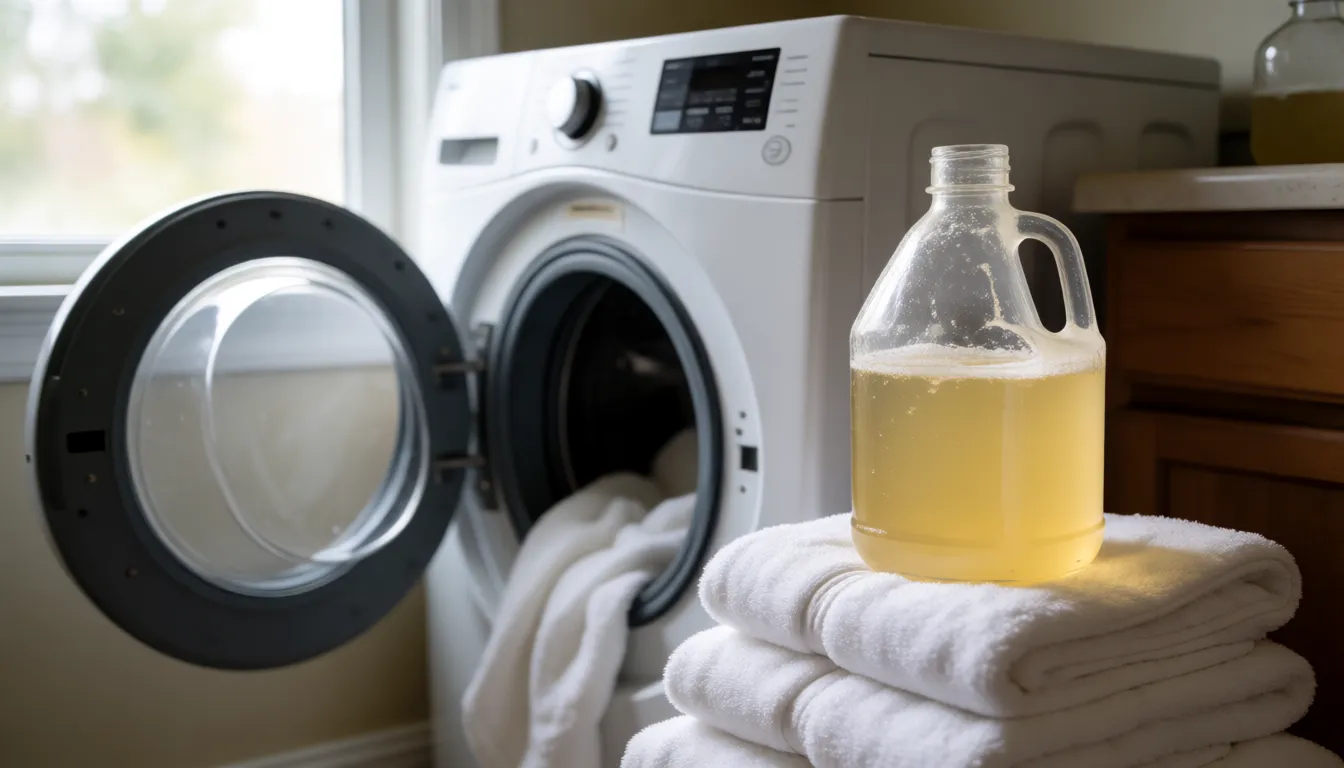
Plenty of recipes call themselves low-sudsing, but coconut soap is a big lather maker, so don't assume that applies here. In a front-loader, too many suds can leave clothes soapy and stress the machine.
So start at the low end, well under the amounts above, and watch a wash cycle through the door. If suds climb the glass, cut back. Also check your machine's manual, since some specify HE detergent. I can't promise this is safe for any particular machine, so your manual has the last word.
Hard Water and How Well It Really Cleans
Soap reacts with the calcium and magnesium in hard water and leaves scum. It can dull colors and trap dirt gradually, so problems may not show at first. Watch for:
- Whites turning dingy or gray
- Stiff towels
- A film or residue in the drum after a few weeks
If you see them, use less soap, run a hot maintenance wash with a scoop of washing soda and no clothes, or switch to a commercial detergent for the hard-water loads. Washing soda softens water, which is part of why it's in the mix. Coconut soap handles hard water better than most, but it isn't immune.
As for how well it cleans: it's cheap, simple and does a good job on lightly soiled everyday clothes. It won't match a modern surfactant detergent on heavy grease or ground-in dirt, and I'd rather tell you that than have you find out with a set of work jeans. For a longer look at what works and what doesn't, see this homemade detergent breakdown.
The Bar as a Stain Stick
You don't have to grate the bar. Wet the stain, rub it with the bar until there's a good layer of lather, and let it sit for a while, at least 15–30 minutes for older stains. Then wash as usual. It's the easiest use of the bar, and I reach for it more than the powder.
Troubleshooting
- Soft or crumbly bar: Soft usually means it hasn't cured long enough, so give it more weeks. Crumbly often means it was cut too late, or the batch got too hot. Crumbly bars still grate fine, so use them for powder or liquid.
- Powder clumping: Moisture is almost always the cause. Grate finer, seal the container airtight, and store it somewhere dry. Break up clumps with a fork.
- Liquid separating or too thick: Separating is normal, so stir or shake before use. If it's like a solid gel, stir in a bit more hot water. If it's watery, use a little more per load.
- Too many suds: Use less. This is the classic coconut-soap issue, especially in HE machines (see above).
- Residue on dark clothes: This is usually soap scum from hard water or too much soap. Cut back the amount, run a hot washing soda maintenance wash, and see the hard water section.
If the bar itself misbehaves, Cold Process Soap Problems: What's Wrong and How to Fix It has more fixes.
More from the blog
- What Is Saponification? How Oil and Lye Become Soap
- How to Make Liquid Soap: KOH Paste, Dilution, Fixes
- How to Make Breastmilk Soap: Melt and Pour or Cold Process
- Essential Oils for Soap Making: Rates, Picks and Fixes
- Soap pH: What's Normal, Why It's Alkaline, How to Test
- Master Batching Soap: 1:1 Lye Solution and Oil Blends
- All posts →