Safety
Lye Burn First Aid: What to Do for Skin, Eyes and More
By The Soap Brain Team — Cold-process soap makers & formulators
·
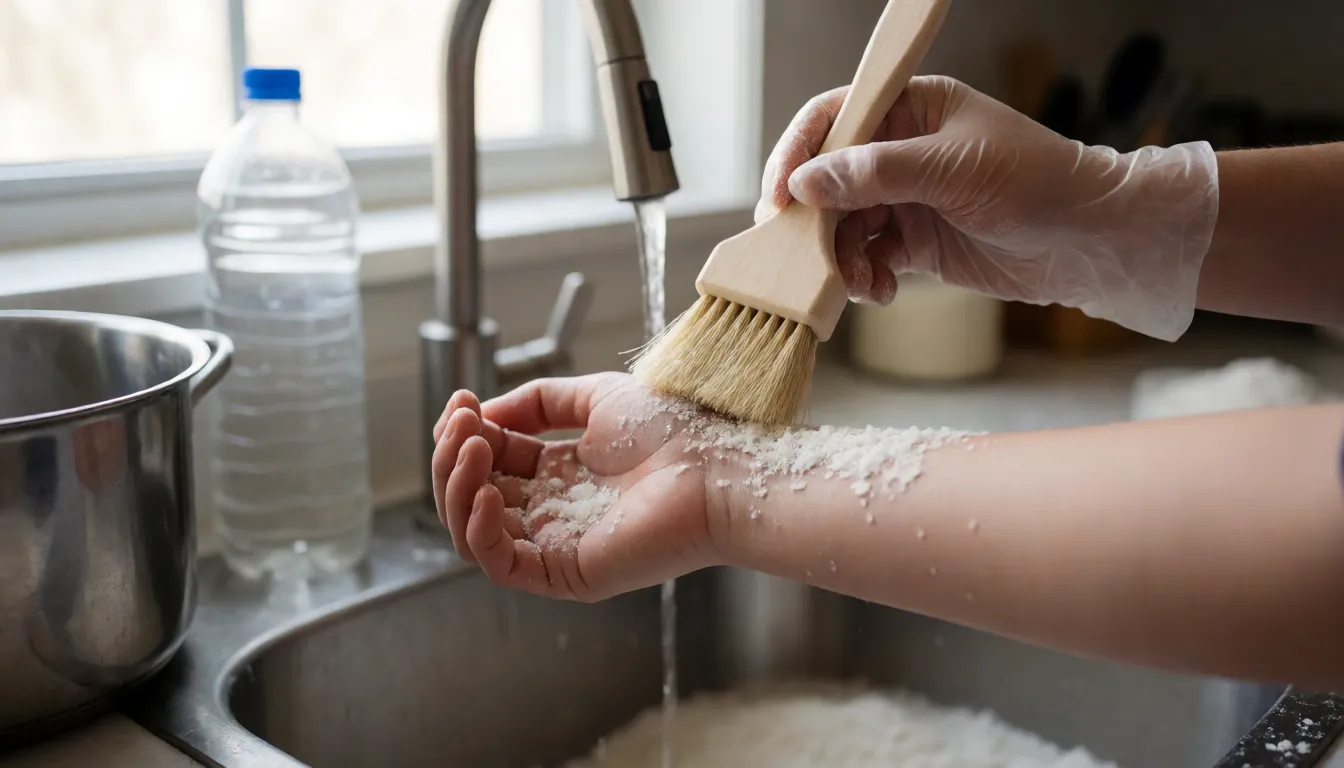
Lye burns are fast, but the first aid is simple, and the first move depends on how the lye got to you. For skin or eyes, start flushing with plain running water immediately. For swallowed lye, call Poison Control first. For inhaled dust or fumes, get to fresh air. The sections below cover each route and the reasons behind the steps.
Do this now
- Skin or eyes: Start flushing with plain running water right away. If you are alone, rinse first and call anyone afterward.
- Swallowed: Do not start with rinsing. Call Poison Control (US: 1-800-222-1222) or emergency services first. Do not induce vomiting.
- Inhaled: Get to fresh air first.
Have a bucket or a hose within reach, and the Poison Control number posted, before you mix. Setup details are in our Lye Safety for Soapmakers article.
A chemical burn moves quickly, but the response is short and needs nothing special: water, time, and a phone call when the checklist below says so.
What's on you decides the first step
The form of lye on you changes what you do in the first few seconds, before the flush starts.
Dry lye (flakes, beads, dust). Brush or blot off the excess first, using a gloved hand or a brush, and keep it away from your eyes. Then flush with plenty of cool running water. The order matters because water added to a pile of dry lye on skin dissolves it into a concentrated solution held right against the skin. Removing the bulk first means the water dilutes and carries the lye away instead of making things worse.
Lye solution (lye water). It is already liquid, so there is nothing to brush off. Go straight to flushing, and deal with soaked clothing and jewelry as you rinse.
Raw soap batter. Batter is still caustic until saponification is finished. Saponification is the reaction between lye and oils that produces soap and glycerin, and it takes time to complete. Treat batter as a milder version of lye solution: scrape or wipe off any thick excess, then flush. Don't assume a low-lye, well-superfatted recipe is safe on skin or in eyes. Superfat is the percentage of oil deliberately left unreacted in the bar. It doesn't neutralize lye that is still active in wet batter.
| What's on you | Before flushing | Then |
|---|---|---|
| Dry lye | Brush or blot off excess (gloved hand or brush), keep away from eyes | Flush with plenty of cool running water |
| Lye solution | Nothing to remove | Flush immediately; remove soaked clothing and jewelry as you rinse |
| Raw soap batter | Remove thick excess | Flush with running water |
Why it keeps burning: the mechanism
Sodium hydroxide is the same chemical that turns your oils into soap. In a pot, it reacts with triglycerides. On your body, it reacts with the fats and proteins in skin and breaks the tissue down. Alkali burns can also penetrate deeper than many acid burns, because the tissue the alkali dissolves doesn't form much of a barrier to stop it.
The key point is that the reaction doesn't stop when the splash lands. The damage continues for as long as active alkali is sitting on the tissue, and it ends only when the lye is diluted and washed away. That is why the flush starts before any phone call, and why the rinse times below are minimums, not suggestions.
It also explains why a lye burn can look mild at first. The surface may be only pink or slick-feeling while the damage underneath is still developing. Appearance in the first minutes is a poor guide to severity, which is why the watch list in the aftercare section matters.
Skin: step by step
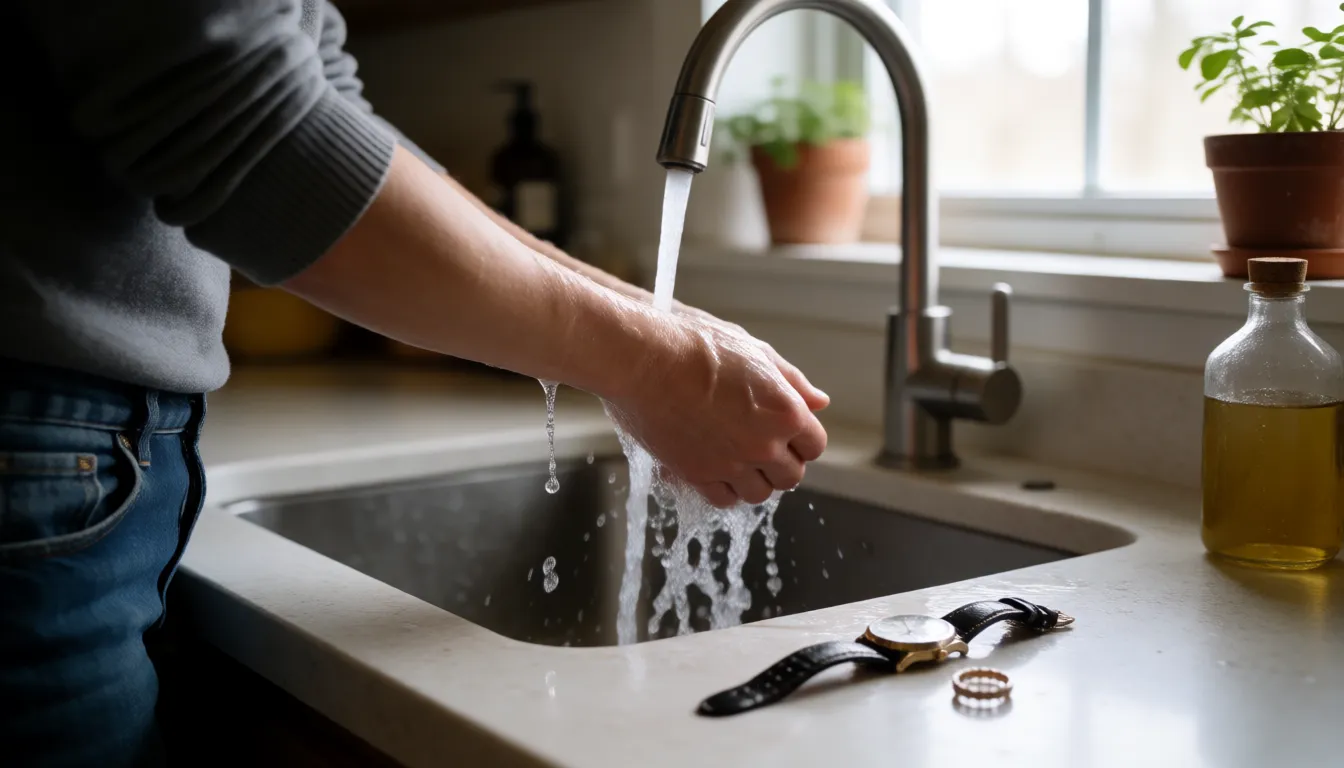
- Start the water. Use cool running water, not a still bowl. Running water keeps carrying the lye away, while a bowl just becomes a lye solution you're soaking in. If dry lye is present, brush off the excess first as described above.
- Remove clothing and jewelry as you rinse. Rings, watches and bracelets trap lye against the skin, and soaked fabric keeps it in contact. Cut clothing off if pulling it over the burn would smear lye across more skin. Double-bag the contaminated clothing so no one handles it bare-handed later.
- Rinse for at least 15 minutes. Fifteen to 20 minutes is typical. Go longer for a large area, or if pain or burning continues. Guides differ, with some giving shorter times and some longer. This article treats 15 minutes as the floor, and the ATSDR medical management guidelines for sodium hydroxide (ATSDR is the US Agency for Toxic Substances and Disease Registry, part of the CDC) are a good reference for the numbers.
Don't reach for vinegar. Do not put vinegar or any acid on a lye burn. The acid-base reaction releases heat, and the acid can injure the tissue further. Plain water is the treatment. Vinegar is fine for cleaning tools and surfaces. The full explanation is in the vinegar-myth section of our Lye Safety for Soapmakers article.
Eyes
Any lye in the eye is an emergency. Start flushing immediately with plain water or saline, and don't spend time looking for the "right" solution. Hold the lids open so the water reaches the whole surface of the eye, and roll the eye around if you can. If contact lenses come out easily, take them out, but don't delay the flushing to do it.
Flush for at least 15 minutes. ATSDR advises at least 30, which is the more cautious end of the range and worth aiming for when you can. Keep flushing on the way to emergency care. If someone else is driving, hold a clean container of water or saline and keep rinsing in the car. The eye is where the stakes are highest, because the cornea is thin and alkali gets through it quickly.
Swallowing
Rinsing is not the first move here. The order is fixed:
- Call Poison Control (US 1-800-222-1222) or emergency services.
- Do not induce vomiting. Do not try to neutralize it. Do not give activated charcoal.
- If the person is alert and able to swallow, and Poison Control or EMS says so, small sips of water or milk may be given, as directed.
- Give nothing by mouth to an unconscious person.
Rinsing the mouth is reasonable, but the person shouldn't swallow the rinse water, and the rinse shouldn't delay the call. Vomiting sends the caustic material back up through the esophagus and mouth, where it can burn a second time, which is why it's ruled out.
If you're outside the US, use your local poison line or emergency number.
Inhalation

Move to fresh air right away. Lye dust and the vapor from a fresh mix can irritate the nose, throat and airways, and the first fix is simply to stop breathing it.
Seek medical help for coughing, difficulty breathing or hoarseness. Severe inhalation can cause lasting hoarseness and reactive airway problems, meaning airways that stay irritable and react to things they used to tolerate. Medical treatment can include oxygen. A brief tickle that clears completely in fresh air is a different situation from symptoms that persist or get worse, and the checklist below covers where that line sits.
Home care or emergency care: a checklist
Go to the ER or call Poison Control or emergency services if any of these apply:
- The eyes, mouth or nose are involved.
- Any lye was swallowed.
- There is breathing trouble.
- The burn is deep or large.
- After rinsing, you are unsure. Call Poison Control and describe what happened.
If any of these apply, don't wait to see how it looks in an hour. Keep flushing while you arrange the trip or the call.
Everything not on the list is a candidate for home care: a small area of skin, rinsed promptly and thoroughly, with no involvement of the face openings. Home care still means watching the burn, which the aftercare section covers.
What the hospital will do
Expect the flushing to continue. Even if you rinsed well at home, staff will typically irrigate again, because the goal is to make sure no active alkali remains.
For eye exposures, hospitals may check the pH of the eye after irrigation. pH is the scale that measures how acidic or alkaline something is, and the check tells staff whether the alkali has actually been cleared or whether more rinsing is needed. It's the reason to keep flushing in transit: the more you've removed before arrival, the less there is left to clear.
Aftercare for a small burn
Once the rinsing is done and the checklist above doesn't apply, the job is to keep the area clean and moist with water-based products, and to leave it alone otherwise.
- Cover it loosely. A clean, loose covering is standard burn care. A nonstick dressing keeps the covering from sticking to the burn, and it shouldn't be wrapped tightly.
- Leave blisters intact. An unbroken blister protects the tissue under it. Don't pop it.
- Avoid oily salves and butter. They trap residue and heat against the skin and make it harder to see how the burn is behaving.
- Avoid vinegar and other "neutralizers." The same reasoning applies as during the rinse.
Watch for changes over the next hours and days: worsening pain, spreading redness, or new blistering. A burn that looks worse hours later is a sign the damage was deeper than it first appeared. Treat that as a checklist item from the section above and seek care.
If you'd like a second reference on lye first aid written from a soapmaker's point of view, Lye first aid at Soapy Stuff is worth a read, and the Soap Brain lye calculator is the place to get your numbers right before the next batch.
More from the blog
- Lye Safety for Soapmakers: Gear, Airflow, and First Aid
- Soap Making: Weigh, Not Volume, for Safe Lye Math
- KOH Safety for Liquid Soap: Handling, Paste and Dilution
- How to Zap Test Soap Safely, and What a Zap Means
- Lye Heavy Soap: How to Tell, Fix It or Toss It
- What Is Saponification? How Oil and Lye Become Soap
- All posts →