Guides
Goat Milk Soap Recipe That Stays Creamy, Not Orange
By The Soap Brain Team — Cold-process soap makers & formulators
·
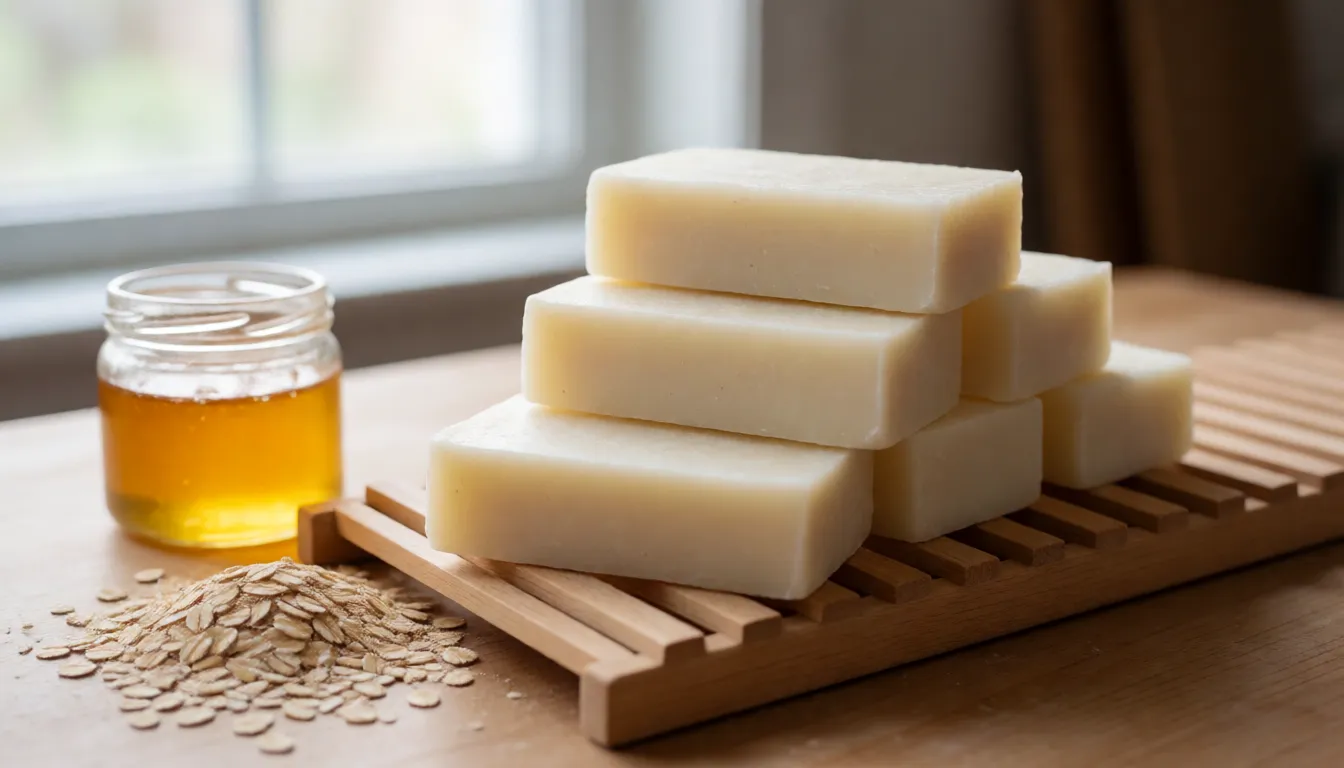
Freeze the milk into cubes, weigh it, park it in an ice bath, and sprinkle the lye in over four stages, stirring until each addition dissolves before the next. Keep everything cold from start to finish. That's the whole trick to goat milk soap that comes out creamy white instead of orange and pungent. The rest of this article is the recipe built around it, plus a rescue plan for when a batch browns anyway.
You'll also get a straight answer on whether goat milk soap is "pH-balanced." It isn't, and it's still a lovely bar.
Why Goat Milk Soap Scorches, and the Cold Routine That Prevents It
Milk is full of sugars. Lye dissolving in liquid gets hot on its own, and hot lye plus milk sugars means scorching: the mixture turns yellow, then orange, then sometimes brown, and it can smell sharp and unpleasant. Once it's happened you can't undo it. You can only stop it from happening.
So the routine is about heat control at every step:
- Freeze the milk into cubes so the lye has to melt its way in slowly.
- Sit the container in an ice bath so the heat has somewhere to go.
- Add the lye in stages, about a quarter at a time, and stir until each addition has dissolved before the next. Slow is the point.
- Soap cool. Use lower temperatures for both the milk-lye mixture and the oils, with specific numbers in the method below.
- Chill the mold if you're adding honey or oats, or going all-milk. More on that in the fridge section.
The frozen-cube, staged-lye approach is what both Lovely Greens and Oak Hill Homestead describe, and it matches how I do it. If you've made a water-based bar or two, nothing here is harder. It's just slower and colder.
Full Milk or Half Milk: What I'd Start With
You can replace all of the lye solution's water with milk, or just half. Full milk gives the creamiest bar and the highest scorch risk, because there's more sugar in the pot. Half water, half frozen milk is gentler and far more forgiving. Lovely Greens takes that half-and-half approach, with equal parts water and frozen milk.
My advice: make your first goat milk batch half and half. Do the ice bath, do the staged lye, and get a feel for how the mixture behaves. Move to full milk once the routine feels boring. Boring is what you want when the pot is full of milk and lye.
For half and half, run the recipe through the calculator (next section), take the liquid weight it gives you, and use half of that as water and half as frozen milk. The milk still replaces water gram for gram.
The Recipe: Oils, Lye Calculator Settings, and Yield
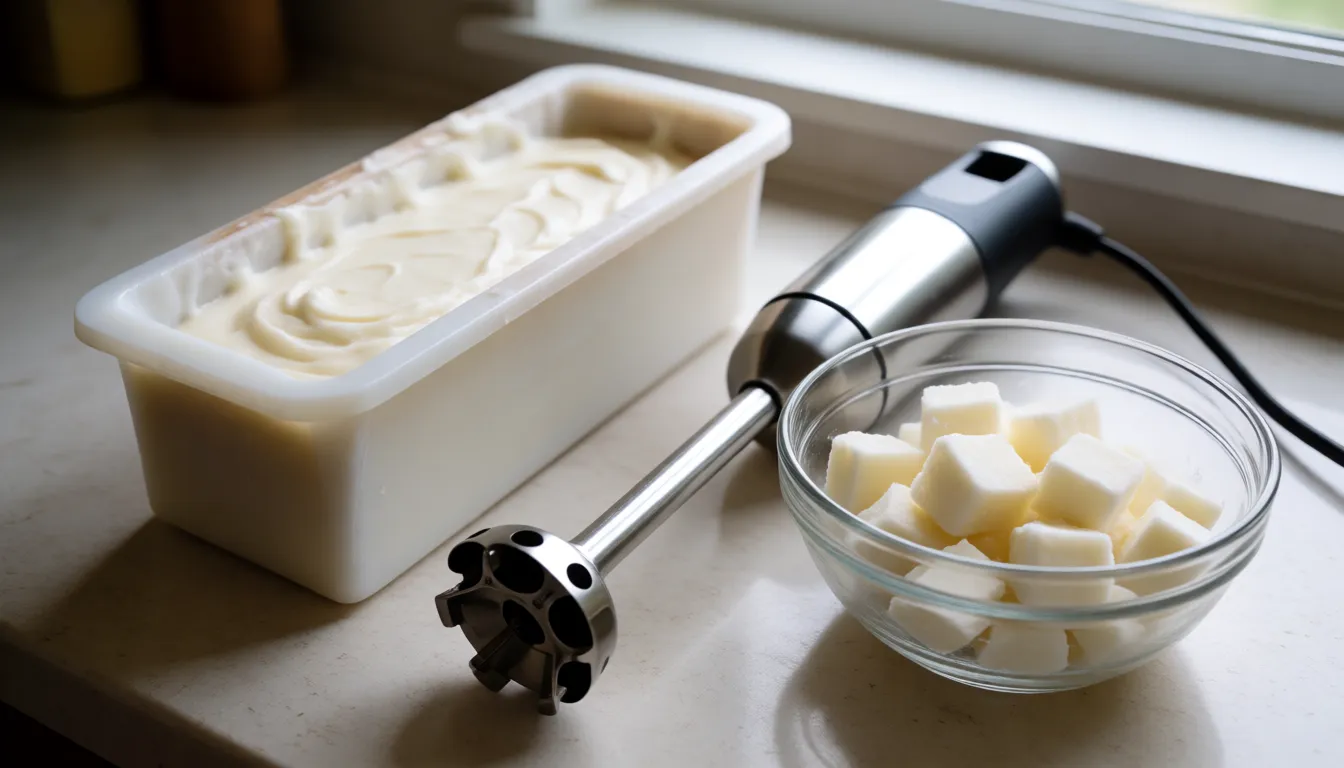
This is a soft, conditioning base with plenty of shea butter and a firm-enough share of coconut oil for lather. It makes a creamy white bar that cuts cleanly.
| Oil | Grams | Percent |
|---|---|---|
| Olive oil | 400 g | 40% |
| Coconut oil | 250 g | 25% |
| Shea butter | 300 g | 30% |
| Castor oil | 50 g | 5% |
| Total oils | 1000 g | 100% |
Because the percentages are listed, you can scale it to any batch size: a 500 g batch is half of each, and so on. If you'd like to know what each oil brings to the bar, this rundown of soap making oils covers it.
Run the oils through your lye calculator. I use the Soap Brain lye calculator. Set it to:
- Superfat: 5%
- Lye concentration: 33%
The calculator gives you two numbers: the weight of lye and the weight of liquid. Take that liquid weight and freeze exactly that much goat milk (or half of it, if you're doing half and half). Weigh everything on a scale rather than measuring by volume. Milk cubes are awkward shapes, and cups lie. Why weighing matters for lye math is worth a read if that's new to you.
Weigh the milk before freezing, or weigh the frozen cubes straight into your container. Either works, as long as you're weighing.
Fragrance or essential oil: use your supplier's recommended usage rate for that specific oil, because safe amounts differ from oil to oil. To turn the rate into grams, multiply your total oil weight by the rate as a decimal. For a 1000 g batch, that's 1000 × the rate. Weigh it out and add it at trace.
Yield and mold: this batch of oils, plus milk and lye, makes roughly 1.5 kg of batter. That fills a standard loaf mold of about that capacity and cuts into around 8 to 10 bars, depending on how thick you slice.
Step by Step: Freezing, Adding Lye, Soaping Cool, and Pouring
Safety, once, plainly. Wear goggles, gloves and long sleeves, and work with the window open or a fan going. A mask helps if the fumes bother you. Lye always goes into the liquid, never the other way around. If lye splashes on skin or in eyes, rinse with plenty of running water right away. Keep kids and pets out of the kitchen. Fresh soap batter is caustic until it has set, so keep your gloves on when you wash the bowls and stick blender. For the full rundown on gear and airflow, see Lye Safety for Soapmakers.
Now the method:
- Freeze the milk. Pour it into ice cube trays and freeze solid. Weigh out the amount the calculator gave you.
- Prep the ice bath. Set your lye-safe container of frozen milk cubes inside a larger bowl or sink filled with ice and a little water.
- Add the lye in four stages. Weigh the lye and sprinkle about a quarter over the cubes. Stir gently until it dissolves and the cubes start to melt. Wait, then add the next quarter. Repeat. It takes patience, and it's supposed to.
- Keep it cold. The finished milk-lye mixture should be around 70°F (21°C). It often looks pale yellow, which is normal. Deep orange or a sharp smell means it got too hot.
- Melt the oils gently. Keep the solid oils (coconut, shea) and liquid oils (olive, castor) separate until you need them. Melt the solids, then stir in the liquids, which helps bring the temperature down. Aim for about 90°F (32°C).
- Combine. My soaping target is oils at 90°F and the milk-lye mixture at 70°F. Pour the mixture into the oils.
- Stick blend to light trace. Use short bursts, stirring in between, until the batter looks like thin pudding and leaves a faint trail. Add your fragrance at your supplier's rate here, if using.
- Pour and tap. Pour into the mold, tap out air bubbles, and decide whether it's going in the fridge (next section).
Honey, Oats, and the Fridge Option
Honey and oats are the classic goat milk soap add-ins, and both make the batch hotter. Honey is sugar, and sugar plus lye plus milk is a scorch recipe. So go easy and go cold.
- Honey: about 1 teaspoon per pound of oils, which is roughly 2 teaspoons (around 15 g) for the 1000 g batch. Stir it into the melted oils before you add the milk-lye mixture. Start at the low end. More honey means more heat and a darker bar.
- Oats: about 1 tablespoon of finely ground oats per pound of oils, so roughly 2 tablespoons (around 15 g) here. Stir them in at trace, not before.
Chilling the mold for 12 to 24 hours is a common way to keep milk soap from overheating. I treat it as an option that matters most in three cases: you added honey, you added oats, or you went full milk. On a half-and-half batch with no extras and a cool room, I often skip it.
If you use the fridge:
- Cover the mold so nothing drips or gets in.
- Label it, so nobody mistakes it for a dessert.
- Keep it away from food and out of kids' reach.
- Expect cold soap to take longer to firm up, so give it extra time before unmolding.
Unmolding, Cutting, and Curing
Leave the soap in the mold undisturbed for 24 to 48 hours. If it spent time in the fridge, lean toward the longer end, or past it. Cold soap firms slowly, and a soft loaf tears if you rush it. Once it's out, let it sit about a day before cutting, which gives the surface time to firm up so slices come out clean.
Then cure the bars for 4 to 6 weeks in a spot with good airflow, turning them once in a while. Goat milk bars are a little softer than plain water bars when fresh, and the cure is what gives you a harder, longer-lasting, milder bar.
If your loaf came out darker than expected, or smelled odd, the next section is for you.
My Orange, Smelly Batch, and What to Do With Yours
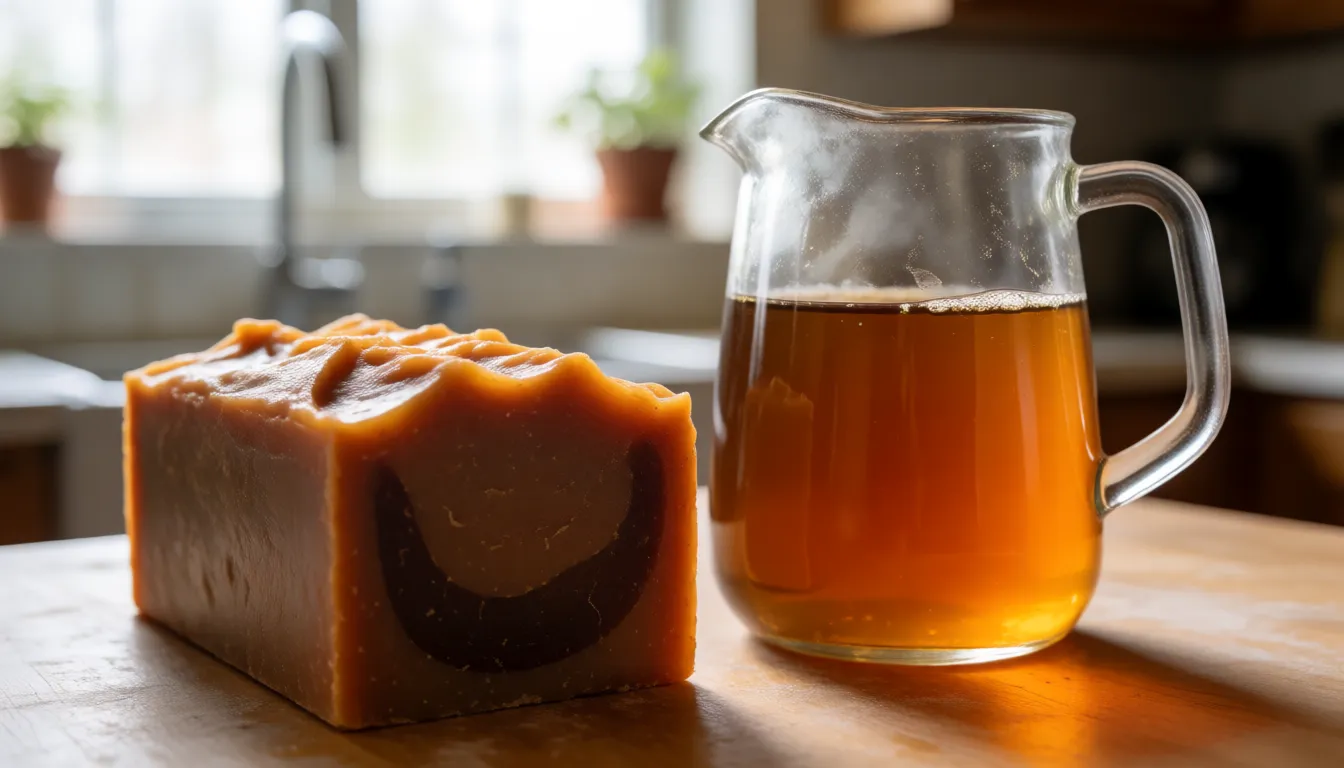
My first goat milk batch went wrong before I'd even picked up the stick blender. I had a carton of goat milk, a hurry, and a bad idea: pour the lye into room-temperature milk in one go, like I would with water. The milk turned orange as I stirred, then a deeper amber, and it smelled sharp and a little barnyard-y. I made the soap anyway because I'd already weighed the oils. It came out a warm butterscotch color with an edge of that smell that didn't love me back.
The fix was embarrassingly simple: freeze the milk, add the lye in stages, and use an ice bath. The next batch came out cream-colored and smelled like soap.
Likely causes, most common first:
- Lye added too fast, or to milk that wasn't frozen or cold enough. This is the big one, and it's what happened to me.
- Oils that were too hot. Pouring a hot lye mixture into hot oils pushes the temperature up quickly.
- A hot room or an insulated mold. Milk soap heats itself during gel, and a warm spot makes it worse.
- Sugary additives. Honey especially, and to a lesser extent oats.
How to tell which one it was:
- If the mixture turned yellow or orange, or smelled sharp, as the lye went in, it's cause 1. The scorch happened in the pitcher.
- If the mixture looked fine and the batter was pale at pour, but the loaf darkened, felt hot, or cracked in the mold, it's a gel-stage overheating problem: causes 2, 3 or 4.
Is it still usable? Usually, yes. An orange or tan bar is a color problem, not a safety problem. A strong smell may fade over the cure, but it might not, so give the bars a sniff test at a few weeks before deciding whether to gift them. If you're worried the bar is off in other ways, Cold Process Soap Problems walks through the common ones.
What to change next time:
- Freeze the milk solid and use the ice bath, adding lye in four stages.
- Drop your soaping temperatures: oils near 90°F, milk-lye near 70°F.
- Chill the mold for 12 to 24 hours (covered, labeled, away from food and kids).
- Switch to half milk if you were going full milk.
- Cut the honey back, or leave it out.
Powdered, Canned, Raw, Cow and Other Milks
You don't need a goat, or even a neighbor with one.
- Fresh or frozen goat milk is the easy case. Freeze it and go.
- Raw goat milk works the same way. Freeze it into cubes like any other.
- Powdered goat milk: mix it with water to the package's strength and treat it like fresh milk, freezing it before use. That's how I do it, and it's a handy way to keep goat milk soap going year-round.
- Canned (evaporated) goat milk: follow the can's directions to reconstitute it to regular milk strength, then freeze it. Weigh the finished liquid, not the can.
- Cow milk and other animal milks behave much the same in soap, since it's the sugars and fats that matter. Lovely Greens makes the same point. Use the same cold routine.
- Breast milk soap is a popular aside. It follows the exact same freeze-and-add-lye-slowly method, and the same scorch rules apply.
Whatever milk you use, the weight of liquid the calculator gives you stays the same. Just make sure what you freeze weighs that much.
What Goat Milk Does for Skin, and the pH-Balanced Myth
Let's be kind and honest here. The fats in milk, along with the shea, olive and coconut oils in the recipe, give you a creamy, conditioning lather. The bar feels gentle, and plenty of people love using it.
There's also a small chemistry story. Milk contains lactic acid, which turns into sodium lactate in the finished soap. Sodium lactate may act as a mild humectant, meaning it can attract a little moisture, but it's present in tiny amounts. Field and Lather has a good look at the lactic acid science versus the marketing. Most of the "skin benefit" you feel comes from the oils and the 5% superfat, and a soap is still a wash-off product. It rinses down the drain, so don't expect it to work like a leave-on lotion.
Now the myth. You'll see goat milk soap sold as "pH-balanced," and that doesn't hold up. Raw goat milk is only slightly acidic, around pH 6 to 6.7. But the lye turns the milk and oils into soap, so the milk's pH doesn't carry over. Cold process soap, with or without milk, is alkaline, roughly pH 9 to 10 or higher. Skin sits around 5.5.
Some reports put milk soaps slightly lower than plain ones, but the difference isn't enough to call any of them "balanced." It's a great bar. It just isn't pH-matched to your skin.
In practice: it's fine for most people, so wash with it happily, but don't buy or sell it on the promise of being pH-balanced. If you have sensitive skin, use common sense and patch-test a bar first: lather a little on your inner forearm, rinse, and see how the spot looks over the next day.
More from the blog
- What Is Saponification? How Oil and Lye Become Soap
- How to Make Liquid Soap: KOH Paste, Dilution, Fixes
- How to Make Breastmilk Soap: Melt and Pour or Cold Process
- Essential Oils for Soap Making: Rates, Picks and Fixes
- Soap pH: What's Normal, Why It's Alkaline, How to Test
- Master Batching Soap: 1:1 Lye Solution and Oil Blends
- All posts →